Commercial Evolution & Technical Paradigm
The Paradigm Shift in Electrostatic Dissipation for Structural Composites
In modern structural polymer engineering, high-performance thermoplastics and thermosets—such as polyamides (PA6, PA66), polybutylene terephthalate (PBT), polycarbonate (PC), and polyetheretherketone (PEEK)—are increasingly fortified with glass fibers (GF), carbon fibers (CF), or inorganic platelets. These structural reinforcements confer outstanding tensile strength, flexural modulus, and heat distortion temperatures (HDT). However, the inclusion of non-conductive reinforcing fibers, coupled with the inherently insulating nature of base polymer matrices (volume resistivity exceeding 10¹⁴ to 10¹⁶ Ω·cm), exacerbates severe electrostatic charge generation through triboelectric contact and aerodynamic separation.
Uncontrolled triboelectric accumulation leads to catastrophic industrial consequences: dangerous electrostatic discharge (ESD) events capable of igniting airborne hydrocarbon vapors or combustible fine dusts in ATEX-certified chemical plants; irreparable dielectric breakdown of sub-5nm semiconductor nodes during automated component handling; and unsightly surface dust accretion on critical class-A automotive exterior modules. For decades, chemical formulators relied on low-molecular-weight migratory antistatic agents, such as ethoxylated alkylamines, glycerol monostearates (GMS), and aliphatic sulfonates.
These conventional surfactants operate solely by exuding to the component surface and absorbing ambient atmospheric moisture to construct a transient, hydrogen-bonded conductive film. This outdated mechanism introduces severe drawbacks:
-
Extreme Environmental Dependency: When atmospheric relative humidity (RH) plunges below 20–30% (standard in cold winter conditions or cleanroom air filtration systems), migratory surfactants completely fail, driving surface resistivity back into the highly insulating range (>10¹³ Ω/sq).
-
Interfacial Structural Compromise: Migrating surfactants inevitably diffuse along the fiber-matrix interfaces. In glass-fiber-reinforced composites, this creates boundary layer plasticization, dramatically reducing interlaminar shear strength (ILSS) and impact toughness.
-
Outgassing and Surface Contamination: Volatile migration creates greasy surface blooms, promotes mold plate-out during high-cycle injection molding, and induces severe delamination in structural coatings, automated ultrasonic welding, and adhesive bonding.
-
Transient Lifespan: Routine aqueous solvent washing, mechanical abrasion, or environmental weathering permanently strips the migratory surfactant layer away, leaving structural components completely unprotected against static accumulation.
Ionic Liquid Mechanisms: The Next Horizon in Inherently Dissipative Polymers (IDPs)
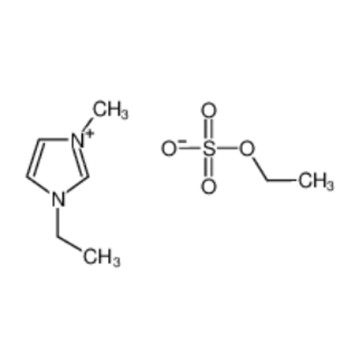
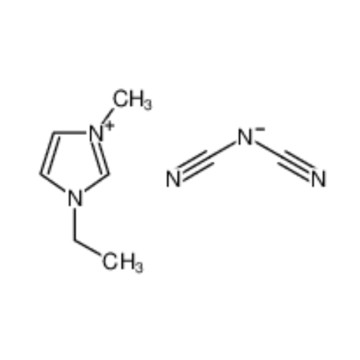
To transcend the physical limitations of migratory chemistry, Qingdao Yihoo Polymer Technology Co., Ltd. has spearheaded the industrialization of ionic liquids (ILs) and inherently dissipative polymer networks, exemplified by Anti-Static AS601 (1-Ethyl-3-methylimidazolium ethylsulfate) and Anti-Static AS603 (1-Ethyl-3-methylimidazolium dicyanamide).
Unlike conventional surfactants, ionic liquids are non-volatile molten salts characterized by wide liquidus temperature ranges, high intrinsic ionic conductivity, negligible vapor pressure, and extraordinary thermal decomposition thresholds (often exceeding 260°C–320°C). When compounded into structural polymer systems, the imidazolium cations and counter-anions interact with the polar segments of the host polymer matrix through localized dipole-dipole interactions, hydrogen bonding, or ion-dipole coordination.
Instead of migrating to the exterior interface, these room-temperature ionic liquids establish a microscopic three-dimensional perlocated ionic network within the amorphous domains of the polymer matrix. Electrical charge dissipation occurs through rapid hopping and localized ion mobility driven by the internal electrostatic potential gradient. Crucially, because the dissipation mechanism does not depend on the condensation of atmospheric moisture, materials modified with AS601 and AS603 maintain completely uniform, permanent surface resistivity values (10⁷ to 10⁹ Ω/sq) even at 0% relative humidity and cryogenic temperatures.
| Performance Characteristic |
Conventional Migratory Surfactants |
Conductive Carbon Black / CNTs |
Permanent Ionic Antistats (AS601 / AS603) |
| Surface Resistivity Range (Ω/sq) |
10¹⁰ – 10¹² (Highly Humidity Dependent) |
10³ – 10⁶ (Conductive / Shielding) |
10⁶ – 10⁹ (Dissipative / ESD Safe) |
| Low Humidity Efficacy (< 20% RH) |
Unstable / Inactive |
Unaffected |
Completely Stable & Permanent |
| Optical Transparency & Color |
Hazy / Opaque surface bloom |
Opaque Jet Black Only |
Fully Transparent / Colorless / Tintable |
| Fiber-Matrix Interfacial Adhesion |
Degraded by Surfactant Migration |
Significant Viscosity Spike; Embrittlement |
Preserved; Minimal Modulus Impact |
| Extractability & Washing Resistance |
Easily Washed Off with Water/Solvent |
Permanent |
Permanent (Internal Ionic Entanglement) |
| Thermal Processing Stability |
< 180°C (Volatile Outgassing / Fuming) |
> 400°C |
> 280°C – 320°C (High Compatibility) |
Deep Engineering Application Scenarios
The synergy between structural reinforcement and permanent ionic dissipation unlocks unprecedented engineering design possibilities across several critical industries:
1. Electric Vehicle (EV) Power Systems & Battery Module Enclosures
In modern electric mobility architectures, battery module covers, busbar holders, and high-voltage junction boxes are subjected to aggressive mechanical vibration, elevated operating temperatures (85°C–120°C), and stringent flame retardancy standards (UL94 V-0). While glass-fiber-reinforced PA66 or PBT composites provide the required structural integrity, triboelectric accumulation from cooling fans or road-induced micro-friction represents a catastrophic spark ignition hazard. Integrating Anti-Static AS601 ensures an inherently dissipative threshold that harmlessly bleeds accumulated static into the chassis ground, eliminating electrical arcing risks without reducing the matrix's dielectric breakdown voltage or tensile yield strength.
2. Semiconductor Cleanroom Fabrication & Advanced Wafer Handling
Automated wafer handling systems, Front Opening Unified Pods (FOUP), and integrated circuit shipping trays are manufactured from ultra-clean engineering polymers like PEEK, polycarbonate, or cyclic olefin copolymers. Traditional conductive additives like carbon black slough off conductive carbon micro-particulates, contaminating sub-micron silicon dies. In contrast, Anti-Static AS603 provides a crystal-clear, non-shedding, inherently dissipative network with ultra-low ion elution rates. The static decay half-time (from 5000V down to 0V) is slashed to less than 0.05 seconds under MIL-STD-3010C Test Method 4046, safeguarding cutting-edge microchips from dielectric punch-through.
3. ATEX-Compliant Explosive Chemical Conveyance & Mining Ventilation
Pneumatic conveying pipes, pump housings, and ventilation ducting in chemical manufacturing plants and underground coal mines must satisfy European ATEX Directive 2014/34/EU and IEC 60079 standards. High-velocity transit of non-conductive powders or explosive hydrocarbon solvents creates enormous triboelectric charge separation. By reinforcing high-density polyethylene (HDPE) or polypropylene with mineral fillers and permanent ionic dissipative compounds, systems achieve electrostatic decay paths that completely eradicate ignition hazards while retaining heavy-duty burst pressure performance.