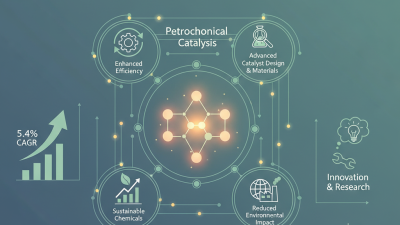
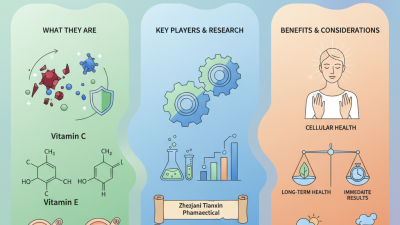
When it comes to picking a catalyst supplier, global buyers aren't just looking for a name they recognize. The way petrochemical catalysis plays out can totally change the game—affecting conversion rates, product quality, energy consumption, and how stable your operations are. Here's the thing though: a catalyst that works wonders in one reactor might totally let you down in another. You've gotta consider the feed composition, temperature, pressure, and how you plan to handle regeneration. All of that stuff really matters.
When you look at suppliers like BASF, Clariant, Honeywell UOP, Topsoe, and Axens, you quickly realize they all bring something different to the table—different tech, different support styles. So how do you actually pick between them? I've found it helps to compare them on things that matter in the real world: how much relevant experience they have, how thorough their technical docs are, whether their product behaves consistently, how responsive they are when you hit a snag, and if they can keep supplying you without surprises. There's a really useful insight from Robert J. Farrauto, a catalyst researcher—I'm paraphrasing here—that basically says: don't get swayed by fancy catalog specs; choose catalysts based on what actually happens in your process conditions. And that distinction? It's a game-changer. Hey, if you're the one buying, don't just settle for any performance data—ask for the kind that's tied to operating conditions pretty close to yours. And then, you've gotta clarify what technical support you'll actually get once it's installed, you know?
Look, no shortlist is perfect. Public data can be spotty, and supplier claims don't always line up directly. So a smart evaluation checks references, test methods, and service arrangements before you buy. And really dig into the details: like a sample's activity curve, the stated operating window, or how they'd respond to a process upset. Small differences can really affect how a plant runs day-to-day. This overview is just a starting point – not a substitute for a proper site-specific engineering review. Honestly, the right supplier is the one that fits your actual process—the right catalyst, evidence, and support, not just the one with the biggest brand name.
Top Petrochemical Catalysis Suppliers for Global Buyers?
Petrochemical Catalysis: Core Applications and Buyer Priorities
Catalysts influence yield, product quality, energy use, and operating stability across petrochemical plants. They support key processes such as catalytic reforming, hydrotreating, and polymer production. In a reactor, even small changes in feed composition or temperature can affect selectivity and catalyst life. Small differences matter.
Demand makes these choices consequential. The International Energy Agency’s 2018 Future of Petrochemicals report projected that petrochemicals would drive over one-third of global oil-demand growth through 2030. Its outlook put the share near half by 2050. Buyers should therefore assess more than initial activity: test performance against actual feedstocks, operating temperatures, pressure, and likely contaminants. Request data on deactivation rates, regeneration needs, and product selectivity under representative conditions.
Total cost deserves close scrutiny. A catalyst with a lower purchase price may require more frequent replacement, increase pressure drop, or complicate shutdowns. Compare expected operating life, handling requirements, technical support, and consistency between production batches. Ask suppliers to clarify test methods and provide traceable performance data. A polished specification sheet is not proof of plant performance. Some assumptions will remain uncertain until a controlled trial confirms them.
Catalyst choice shapes yield, energy use, and product quality. Zeolites rely on ordered pores and adjustable acid sites to guide cracking and conversion. In a refinery unit, pore size can influence which molecules reach active sites. Small differences matter.
Supported-metal catalysts disperse active metals across porous carriers, supporting reactions such as hydrogenation and reforming. Their performance depends on metal dispersion, support properties, and resistance to contaminants. Buyers should compare operating-life data, not just initial activity.
Polymerization systems, including Ziegler–Natta and metallocene catalysts, help control polymer structure and melt behavior. The right system depends on reactor design and the intended resin properties. IEA’s 2018 report, The Future of Petrochemicals, projects that petrochemicals will drive more than one-third of oil-demand growth through 2030. That outlook makes catalyst efficiency commercially important.
Yet published results can hide differences in feed quality, temperature, and test duration. A clean lab result can mislead. Suppliers’ data should be checked against plant conditions, and buyers should ask how performance changes over time.
In fluid catalytic cracking (FCC), the riser is where hot catalyst briefly contacts vaporized feed. Typical riser temperatures of 500–550°C (932–1,022°F) support rapid cracking, but the number is an operating window, not a universal setpoint. The European Commission Joint Research Centre’s 2015 refinery Best Available Techniques reference describes FCC reaction temperatures in this range. The U.S. EPA’s AP-42 Chapter 5.1 reports reactor temperatures of about 900–1,000°F, a somewhat lower range. Differences can reflect unit design and where temperature is measured.
A few degrees can matter. Higher temperatures may increase conversion, but can also promote unwanted gas and coke formation. Operators track riser outlet temperature alongside catalyst-to-oil ratio, feed quality, and product targets. A practical check is whether temperature readings remain stable as feed composition changes. Not a fixed recipe. The figures in technical reports are useful benchmarks, yet they cannot replace unit-specific operating data. Even a well-instrumented riser may hide uneven mixing or local hot spots. That is easy to overlook. Temperature alone does not describe catalyst performance, and the published ranges can make real refinery differences look smaller than they are.
Global petrochemical catalyst suppliers differ in portfolio breadth, process expertise, and local technical support. Large international providers often combine catalyst development with process licensing, application engineering, and start-up assistance. Others specialize in selected chemistries or reactor designs, offering deeper focus but narrower coverage. That distinction matters. Buyers should compare feedstock flexibility, operating temperature, pressure drop, and expected catalyst life. Ask for reference cases with similar feed composition and throughput, not just headline conversion figures. Real plant data is more useful.
Supplier support can shape results long after delivery. Check how quickly a technical team can review samples, troubleshoot deactivation, and advise on regeneration schedules. Clarify lead times, replacement logistics, and performance guarantees before commercial evaluation. Independent testing and consistent measurement methods help reduce uncertainty across operating conditions. Comparisons are rarely perfect. Plant histories differ, and public case studies may omit details buyers need. Not always. Request a written basis for projected gains, including assumptions about feed quality and turnaround intervals. The paperwork can feel tedious. A modest trial plan may reveal practical limits before a full catalyst changeout.
| Catalyst technology | Common petrochemical process | Typical feed and products | Key performance considerations | Buyer evaluation points |
|---|---|---|---|---|
| Fluid catalytic cracking (FCC) catalysts | Catalytic cracking in petroleum refineries; FCC units can also supply light olefins for petrochemical use. | Heavy gas oils and other refinery streams; products can include gasoline-range hydrocarbons, LPG, and light olefins. | Conversion, product selectivity, coke formation, activity retention, and compatibility with unit operating conditions. | Assess performance using the buyer’s feed assay and unit data; review catalyst replacement needs, technical support, and supply continuity. |
| Zeolite-based catalysts | Catalytic cracking, isomerization, and other hydrocarbon-conversion processes. | Hydrocarbon streams; products depend on the process and catalyst formulation and may include branched hydrocarbons or lighter molecules. | Pore structure, acidity, selectivity, resistance to deactivation, and suitability for the feed composition. | Request application-specific test results and confirm that performance claims match the intended process configuration. |
| Steam-cracking furnace coils and process catalysts | Steam cracking, a thermal process used to produce basic petrochemicals; catalyst-related solutions may be applied to selected process steps or equipment surfaces. | Ethane, propane, naphtha, and other hydrocarbon feeds; major products include ethylene and propylene, with other coproducts varying by feed and operation. | Ethylene yield, furnace run length, energy use, coke formation, and the effects of feedstock choice and operating severity. | Separate catalyst performance from furnace design and operating effects; verify claimed benefits through suitable plant or pilot data. |
| Selective hydrogenation catalysts | Purification of olefin streams, including removal of trace unsaturated impurities. | Cracked-gas or olefin-rich streams; treatment targets can include acetylene in ethylene streams and dienes in other olefin streams. | Impurity conversion, olefin retention, selectivity, catalyst life, and tolerance to feed contaminants. | Check inlet impurity profiles, required outlet specifications, operating envelope, and regeneration or replacement procedures. |
| Polymerization catalysts | Production of polyethylene and polypropylene from olefin monomers. | Ethylene and propylene, sometimes with comonomers; products include grades with different density, melt flow, and mechanical properties. | Polymerization activity, product properties, grade flexibility, reactor compatibility, and control of polymer morphology. | Confirm performance across the intended grade slate and assess technical assistance, qualification requirements, and licensing constraints. |
| Catalytic reforming catalysts | Reforming of naphtha to produce high-octane reformate and hydrogen-containing gas. | Naphtha feeds; products include reformate rich in aromatic hydrocarbons and hydrogen as a process coproduct. | Reformate yield and quality, catalyst stability, feed cleanliness, and performance under the selected regeneration scheme. | Review feed pretreatment needs, unit configuration, catalyst handling requirements, and expected operating cycle. |

Note: Catalyst performance and process conditions vary with feed composition, unit design, operating strategy, and product specifications. Compare suppliers using application-specific data and validated plant or pilot results.
Comparing petrochemical catalyst suppliers starts with test conditions, not headline numbers. Ask for activity data at the temperature, pressure, feed composition, and space velocity relevant to your process. Small changes in feed impurities can alter conversion. Check whether results come from fresh catalyst or stabilized operation. These figures are not interchangeable.
Selectivity shows how much converted feed becomes the desired product; yield reflects both conversion and selectivity. Request product-by-product data and a clear measurement basis. A high conversion number can hide unwanted by-products. Compare results from equivalent runs, and ask how often tests were repeated. One neat data point is not enough. I would not trust it alone.
Catalyst lifetime should describe performance over time, not just an estimated number of operating hours. Ask for activity and selectivity curves, pressure-drop records, and details of the feed used during testing. Ask for the curve. Real feeds matter. Also clarify whether lifetime assumes regeneration, and how many cycles were evaluated. Supplier data can be useful, but pilot testing under representative conditions often reveals gaps. It takes time, and the result may be less tidy than a brochure suggests. That is worth acknowledging before choosing a catalyst.
Compare activity, selectivity, yield, and catalyst lifetime using the same feedstock, operating conditions, and test protocol. The values below are illustrative—not measured supplier results or industry averages.
Activity is shown as feed conversion; selectivity and yield are percentages; catalyst lifetime is shown in months under the example test conditions. In practice, yield depends on conversion and selectivity, while lifetime should be assessed against a defined deactivation or replacement threshold.
For catalyst qualification, BET surface area is useful only when the measurement conditions are clear. ISO 9277:2022 describes determining specific surface area from gas adsorption using the BET method. Ask suppliers for the adsorptive gas, sample mass, pretreatment temperature, degassing time, and reported BET fitting range. A number without these details is hard to compare. In practice, even moisture left in a sample can shift the result.
The IEA’s The Future of Petrochemicals (2018) projects that petrochemicals will drive nearly half of oil-demand growth through 2050. That outlook makes reliable catalyst screening commercially important. Compare results across representative production lots, not just a single sample. Request replicate measurements, instrument calibration records, and measurement uncertainty. BET area does not, by itself, prove catalytic activity or selectivity. That distinction is easy to overlook.
Tips: Align pretreatment conditions before comparing suppliers. Check the full isotherm, not only the final m²/g value. If results vary, investigate sample handling before rejecting a lot. ISO compliance helps—but it cannot replace a sensible qualification protocol.
Selecting a petrochemical catalyst supplier requires more than comparing quoted activity and price. Ask for a controlled plant trial using representative feed, operating temperatures, and realistic start-up conditions. Define the success measures before loading begins: conversion, selectivity, pressure drop, and catalyst life. Small differences matter. Record sampling intervals and agree who reviews the data. Results from a short trial may not predict a full operating cycle, so treat them as evidence, not a guarantee.
Supply reliability deserves the same scrutiny. Ask how the supplier manages production capacity, quality checks, packaging, and shipment updates. Request documentation for each lot and clarify how delays or out-of-spec material are handled. A delivery plan looks solid on paper. Test it with practical questions about lead times and contingency stock. Technical support should be specific, too: identify who will interpret operating data, respond to process issues, and support commissioning. A checklist can still miss details, especially when site teams and supplier teams use different assumptions. Confirm responsibilities in writing, then revisit them after the trial.
China beta molecular sieve suppliers support catalytic cracking and petrochemical operations by providing materials designed to promote efficient conversion and selective product formation. With a porous structure and strong acidic properties, Beta zeolite can help process heavier hydrocarbon molecules and support the production of valuable lighter fractions. Consistent particle characteristics and dependable quality control are important for integrating the catalyst into demanding refining workflows and maintaining stable process performance.
Beyond catalytic cracking, Beta molecular sieves are used in hydrocracking, hydroisomerization, hydrodewaxing, aromatic alkylation, olefin hydration, and olefin etherification. Their adaptable catalytic properties make them suitable for a range of refining and chemical applications, where operating conditions and feedstock requirements can differ. A capable supplier can provide product specifications, technical guidance, and reliable production coordination to help customers select an appropriate grade for their process. By combining application knowledge with careful manufacturing practices, suppliers in China can help petrochemical producers pursue efficient operation and consistent results across multiple process units.
Zeolites use ordered pores and adjustable acid sites. Supported metals spread active metals across porous carriers. Polymerization catalysts help control resin structure and melt behavior.
Pore size can determine which molecules reach active sites during conversion. Small details matter. Even modest differences may change product yields.
Compare metal dispersion, support properties, contaminant resistance, and operating-life data. Initial activity alone can give an incomplete picture.
Match the catalyst system to the reactor design and desired resin properties. Reactor conditions matter. The best fit is not always obvious.
Ask for plant references with similar feed composition and throughput. Request assumptions behind projected gains, expected catalyst life, and regeneration schedules.
Lab tests may use cleaner feed or shorter runs than an operating plant. Temperature, feed quality, and test duration can change results.
Request the test gas, sample mass, pretreatment temperature, degassing time, and fitting range. Moisture in a sample can shift the measurement.
No. BET area measures surface area, not activity or selectivity. Compare representative production lots, repeat measurements, and review the full adsorption isotherm.
Petrochemical Catalysis supports the conversion of hydrocarbon feedstocks into fuels, chemicals, and polymer building blocks. Buyers typically assess catalyst families such as zeolites, supported metals, and polymerization systems according to the process and product requirements. In fluid catalytic cracking, catalysts operate in demanding conditions, with typical riser temperatures around 500–550°C. Their performance can influence conversion, product distribution, and operating efficiency.
Supplier comparisons should consider activity, selectivity, yield, and useful catalyst life, alongside practical factors such as supply reliability and technical support. Qualification may include laboratory characterization, including BET surface area testing under ISO 9277, as well as plant trials to evaluate performance under real operating conditions. A structured purchasing process helps buyers match catalyst properties to their process goals, verify results, and plan for consistent supply over time.