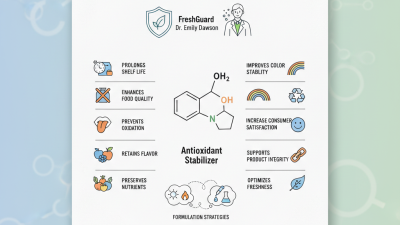
Choosing reliable suppliers requires more than comparing catalog prices. Primary Antioxidants protect polymers by interrupting oxidation chains, especially during processing, storage, and long-term use. Their performance affects color retention, melt stability, odor, and service life.
“Antioxidants are substances that inhibit oxidation.” — Dr. George Wypych, Handbook of Antioxidants.
This principle explains why manufacturer selection deserves technical scrutiny. The China Top 10 Primary Antioxidants Manufacturers overview examines companies serving plastics, rubber, coatings, adhesives, and related industries. It considers product range, production capacity, quality systems, research investment, export experience, and application support. Practical evidence matters. A supplier should provide consistent active content, clear technical data sheets, traceable batch information, and useful guidance on dosage selection.
Names such as Songwon Industrial, SI Group, BASF, Solvay, Adeka, and China-based specialists may appear in purchasing discussions. However, market visibility does not guarantee the best fit. A smaller manufacturer may offer faster customization or stronger support for a specific polymer. That possibility is easy to overlook.
Testing remains essential. Buyers should compare oxidation induction time, color stability, processing temperature, compatibility, and migration behavior under defined conditions. Results can change with resin type, filler loading, moisture, and processing history. Laboratory data alone may not predict factory performance.
This review is not perfect. Public information differs between manufacturers, and rankings can reflect incomplete disclosures. Still, transparent comparison can reduce procurement risk. It can also help technical teams identify partners that combine dependable Primary Antioxidants with responsive engineering support. The strongest choice is rarely the loudest name.
Primary antioxidants are chain-breaking stabilizers. They donate hydrogen to peroxy radicals before oxidation spreads through a polymer. This slows molecular damage, discoloration, cracking, and loss of flexibility.
Common types include hindered phenols and aromatic amines. Hindered phenols are widely used in plastics, rubber, adhesives, and synthetic fibers. Aromatic amines often perform strongly in demanding rubber applications, but they may affect color and compatibility.
Manufacturers select them according to resin type, processing temperature, oxygen exposure, and end-use requirements. According to the 2024 MarketsandMarkets Polymer Stabilizers report, the polymer stabilizers market is projected to grow steadily through 2028, supported by rising plastic production and longer product-life expectations. That growth does not mean one formula fits every application. It does not.
Testing matters. ASTM D3895 measures oxidative induction time in polyolefins using differential scanning calorimetry. A longer induction time usually indicates stronger oxidation resistance under test conditions. However, laboratory performance may not fully predict outdoor aging, recycling cycles, or contact with pigments and fillers. The PlasticsEurope 2023 data review also shows the continuing scale of European plastics production, highlighting why stabilization efficiency remains an industrial concern.
Tips: Check melt-processing data, not only supplier dosage tables. Compare color change, mechanical retention, and oxidation time. Verify migration and regulatory requirements for the intended market. Small formulation changes can create large processing differences. Experience still matters.
China’s primary antioxidants manufacturing industry has changed from volume-focused production to more controlled, application-led development. Earlier factories often competed mainly on price and capacity. Today, leading producers invest in reaction control, purification, and batch-to-batch consistency. These improvements support Polymer Antioxidants used in packaging, automotive parts, cables, and molded products. Modern facilities commonly use laboratory testing for melt flow, color stability, moisture, and thermal aging. Small differences matter. A slight color shift can reject an entire production lot.
The industry has also expanded its technical services. Manufacturers increasingly help processors select antioxidant systems for polypropylene, polyethylene, engineering plastics, and recycled materials. They study processing temperatures, residence time, and interaction with pigments or fillers. However, development is not perfectly uniform. Some suppliers still depend on older equipment or limited application data. Buyers should examine evidence, not only catalog claims. Reliable evaluation includes sample trials, technical documentation, traceable production records, and independent testing where necessary.
Tips: Ask for recent quality data and a clear specification sheet. Check whether the supplier can explain impurity limits, storage conditions, and recommended dosage. Visit the facility if practical. Observe cleanliness, labeling, and sample management. A polished presentation proves little. Real consistency appears across repeated batches. Also review regulatory support for your target markets, because documentation gaps can delay approval. China’s industry is progressing, but careful verification remains essential.
Evaluating China’s leading primary antioxidants manufacturers requires more than comparing prices. Grand View Research’s 2024 report estimates the global antioxidants market at about USD 3.5 billion in 2023, with steady growth expected through 2030. This demand encourages new production capacity, but market growth does not guarantee consistent quality.
Check the manufacturer’s production history, technical team, and annual testing records. Strong suppliers should provide clear specifications for active content, melting range, moisture, ash, and residual solvents. One attractive sample proves little.
Request three recent certificates of analysis from different batches. Compare the results carefully. A reliable manufacturer should explain test methods, laboratory qualifications, and acceptable variation.
ISO 9001 certification supports process control, but it does not replace product testing. For export projects, review Safety Data Sheets against the United Nations GHS system. Confirm applicable REACH or TSCA obligations with an independent compliance specialist.
This step is often overlooked. It can create expensive delays later. Also test the antioxidant in your actual polymer or rubber formulation. Heat-aging performance, color change, and processing stability may differ from laboratory claims.
Visit the factory when possible. Inspect sealed storage, labeling, and batch traceability. Ask about raw-material qualification and change-control procedures.
Use an independent laboratory for pre-shipment verification. Be cautious when a supplier refuses audit access or offers unusually low prices.
A perfect evaluation is unrealistic; documented evidence still reduces avoidable risk.
China’s top 10 primary antioxidants manufacturers are often assessed through product consistency, technical expertise, and production reliability. A serious comparison should examine manufacturing scale, laboratory controls, and export experience. Primary antioxidants help interrupt oxidation by reacting with free radicals. They commonly support plastics, rubber, coatings, adhesives, and synthetic fibers.
Quality & Reliability
The strongest manufacturers usually provide stable powder quality, clear specifications, and batch-level traceability. Their laboratories may use HPLC testing, moisture analysis, and melting-point checks. Small details matter. A sealed inner liner can protect material during humid transport. Reliable suppliers also share safety documents, technical data, and regulatory support for different markets. Their production teams should explain dosage ranges without promising unrealistic performance.
A practical top-ten review should also inspect lead times, packaging options, and complaint handling. Factory audits can reveal clean storage areas, calibrated instruments, and organized sample records. Some manufacturers offer both Primary And Secondary Antioxidant solutions for combined protection. However, no ranking is perfect. Public information may be incomplete, and impressive equipment does not always prove consistent batches. Buyers should request recent test reports, production samples, and references from comparable applications. Price deserves attention, but the cheapest offer can create higher costs through discoloration, processing faults, or rejected shipments.
China’s top 10 primary antioxidant manufacturers mainly supply hindered phenols, aromatic amines, and related stabilizers. Their products protect polymers from oxygen, heat, and processing damage. Common applications include automotive plastics, wire insulation, packaging films, rubber parts, and synthetic fibers. A molded dashboard needs color stability after repeated heating cycles. That is where primary antioxidants perform.
According to Grand View Research, the global polymer additives market was valued at over USD 50 billion in 2023, with antioxidants representing a significant specialty segment. China remains a major production base because of its integrated chemical supply chains and expanding plastics industry. The key phrase Primary Antioxidant And Secondary Antioxidant reflects a practical formulation strategy. Primary antioxidants interrupt free-radical reactions, while secondary antioxidants decompose hydroperoxides. Many leading Chinese producers therefore offer phenolic antioxidants alongside phosphites and thioesters. These combinations support extrusion, injection molding, and long-term outdoor performance.
The exact top-10 ranking is difficult to verify. Public production data is uneven, and some capacity figures are self-reported. Buyers should examine assay levels, melting range, color performance, odor, migration data, and batch consistency. SGS and ASTM testing can strengthen technical evaluation. Product selection still depends on polymer type and processing temperature. More data is needed.
China’s leading primary antioxidant manufacturers should be judged by evidence, not production claims. ISO Survey 2023 recorded 1,265,216 ISO 9001 certificates worldwide, showing how widely quality systems are used. Yet certification alone cannot confirm stable antioxidant performance. Buyers should review batch records, change-control procedures, laboratory calibration, and traceability from raw material to sealed bag.
Quality control must match the application. Reliable factories normally operate under ISO 9001 and ISO 14001, while automotive suppliers may also follow IATF 16949. Export-oriented producers should provide REACH, RoHS, and relevant Chinese GB/T compliance documents when required. Independent testing should verify purity, melting range, ash, moisture, and active content. Small differences matter.
Ask for recent third-party reports.
Production capability is equally important. A serious facility should show segregated reactors, controlled crystallization or blending, dust filtration, and validated packaging lines. Capacity figures should include actual annual output, not only installed equipment. The China Association of Environmental Protection Industry reported continued investment in cleaner production and waste reduction across chemical manufacturing in recent industry reviews. Still, environmental language can be vague. Request wastewater data, energy records, and emergency-response audits.
I would also examine three consecutive commercial batches. One perfect sample proves little. Supplier evaluation is sometimes uncomfortable, because documentation may be complete while process consistency remains uncertain. A practical shortlist should compare certification scope, inspection frequency, complaint response time, and independent laboratory results.
This chart provides a neutral technical reference set for screening primary antioxidant manufacturers. It compares the relative molecular mass of widely used antioxidant substances rather than ranking companies or brands.
Typical supplier evaluation areas: GMP and HACCP controls, ISO 9001 quality management, ISO 22000 or FSSC 22000 food-safety systems, batch-to-batch consistency, traceability, analytical testing, and production scale.
Relative molecular mass values are standard chemical reference data for the listed substances and are shown in g/mol.
Choosing among China’s top primary antioxidants manufacturers requires more than comparing price lists. Start with the intended application, dosage range, processing temperature, and export destination. A capable supplier should provide a current specification sheet, certificate of analysis, safety data, and clear batch traceability. Check whether its production follows recognized quality systems and applicable chemical regulations.
Request representative samples from different batches, not only one attractive sample. Test purity, melting point, moisture, and performance under your actual processing conditions. Ask about raw material controls, contamination prevention, packaging liners, and storage life. Factory audits can reveal details that documents miss, such as poor labeling or crowded warehouses. Communication also matters. Slow answers may become costly during a supply interruption.
Tips: Compare at least three qualified suppliers. Verify the testing laboratory and methods. Confirm minimum order quantities, lead times, payment terms, and replacement procedures in writing. Inspect packaging before shipment, especially during humid seasons. A lower quotation is not always economical. I have seen technically acceptable samples followed by inconsistent production batches; this risk deserves attention. Do not rely on marketing claims alone. Ask for evidence, retain samples, and create a small trial order before committing to regular volumes. Some buyers overlook technical support after delivery, yet formulation adjustments often need quick, practical answers. That gap can affect the entire production schedule.
Supplier evaluation matrix based on verifiable technical, quality, regulatory, and commercial criteria. Company names and brands are intentionally omitted.
| No. | Evaluation Dimension | What to Verify | Relevant Standard or Evidence | Recommended Purchasing Benchmark |
|---|---|---|---|---|
| 1 | Primary Antioxidant Product Scope | Confirm that the supplier produces primary antioxidants such as hindered phenols or aromatic amines, rather than only secondary antioxidants. | Technical data sheet, product specification, CAS number, molecular formula, and application guide. | At least two relevant primary-antioxidant grades suitable for the target polymer, rubber, lubricant, or adhesive system. |
| 2 | Manufacturing Capability | Review production equipment, batch controls, process safety, and the ability to maintain consistent quality at commercial scale. | Factory audit, production-process description, batch records, and capacity statement. | A documented production site with defined quality-control checkpoints from raw materials to finished goods. |
| 3 | Assay and Purity Control | Check assay, moisture, ash, melting range, color, residual solvents, and other product-specific impurities. | Certificate of analysis for every batch and validated analytical methods such as HPLC, GC, Karl Fischer, or titration. | The specification should be agreed before sampling, with traceable test results for production batches. |
| 4 | Quality Management System | Verify whether the manufacturing site operates a documented quality-management system and controls nonconforming products. | A current ISO 9001 certificate issued for the relevant legal entity and production location. | Certificate scope should cover chemical manufacturing or the specific antioxidant production activity. |
| 5 | Regulatory Documentation | Request SDS, GHS classification, composition information, transport classification, and applicable market-registration documents. | Current SDS aligned with the destination market and applicable chemical-inventory requirements. | Documents should identify the legal manufacturer, revision date, hazard classification, and emergency information. |
| 6 | Application Performance | Evaluate thermal stability, processing stability, color retention, volatility, migration behavior, and compatibility with the formulation. | Application test report, formulation guidance, accelerated-aging data, and customer-approved trial results. | Approve the product only after laboratory trials under the customer’s actual processing and aging conditions. |
| 7 | Batch-to-Batch Consistency | Compare retained samples and certificates from multiple batches rather than relying on a single laboratory sample. | Three or more recent batch certificates, retained-sample policy, and change-control procedure. | Measured values should remain within the agreed specification across consecutive commercial batches. |
| 8 | Packaging and Storage | Check packaging integrity, moisture protection, labeling, lot identification, recommended storage conditions, and shelf-life information. | Packaging specification, label artwork, storage statement, and transport documentation. | Packaging should be sealed, clearly labeled, traceable by lot, and suitable for the material’s sensitivity to heat, light, or moisture. |
| 9 | Supply Reliability | Assess raw-material sourcing, production scheduling, inventory policy, export experience, and contingency planning. | Lead-time record, order confirmation process, capacity plan, and business-continuity information. | Prefer suppliers that provide realistic lead times, proactive delay notices, and an alternative supply plan. |
| 10 | Technical and Commercial Support | Review response speed, sample support, formulation assistance, complaint handling, payment terms, and total delivered cost. | Technical contact details, sample records, corrective-action reports, quotation, and shipping terms. | Choose the supplier offering the best combination of verified performance, documentation, service, delivery reliability, and total cost—not merely the lowest price. |

Note: “Top” should be determined through documented qualification, application testing, factory verification, and regulatory review rather than an unsupported popularity ranking.
It has shifted from low-cost volume production toward controlled, application-focused manufacturing. Consistency matters more now.
They support plastics, rubber, coatings, adhesives, synthetic fibers, cables, packaging, and automotive parts.
Request purity, moisture, melting point, color stability, and thermal-aging data. HPLC results can add useful evidence.
Small differences can change processing behavior or product color. One visible shift may reject a full production lot.
Compare technical evidence, batch records, laboratory controls, export experience, lead times, and complaint handling.
Ask for a specification sheet, certificate of analysis, safety data, storage guidance, and traceable batch information.
Yes. A single attractive sample proves little. Test multiple batches under actual processing conditions.
Check cleanliness, labels, storage space, calibrated instruments, packaging liners, and sample management. Polished equipment is not enough.
Not always. Inconsistent material can cause discoloration, processing faults, delays, and rejected shipments.
Some suppliers have limited application data or older equipment. I have seen good samples followed by uneven production. Verification remains necessary.
This article provides a practical overview of China’s Primary Antioxidants manufacturing industry, explaining what these additives are, why they are used, and how they help protect polymers, rubber, coatings, and related materials from oxidation and aging. It also reviews how China’s production capabilities have developed, including improvements in research, formulation, manufacturing efficiency, quality control, and export services.
The guide presents a structured way to evaluate leading Chinese manufacturers without focusing on brand names. It compares key product categories, application areas, production capacity, technical support, quality standards, certifications, testing systems, and supply reliability. It also outlines how buyers can select a suitable supplier by considering product performance, compatibility, regulatory documentation, customization capabilities, order flexibility, delivery schedules, and long-term cooperation potential. By combining these evaluation factors, readers can make more informed sourcing decisions and identify suppliers that match their material requirements, production conditions, and quality expectations.