When it comes to sourcing an Optical Brightener in 2026, global buyers need more than just a long list of suppliers. Sure, having options is great, but what really counts is consistent shade performance, reliable documentation, and practical technical support. You know, a brightener that works perfectly in paper might act quite differently when used in detergents, textiles, plastics, or coatings – even the tiniest differences can make a huge impact. Like, a slight blue tint could mess up an entire production batch, which is kinda stressful to deal with.
Dr. Emily Carter, who's an independent expert in textile chemistry, always reminds us that “Choosing a supplier is more about performance than just price.” That’s something most buyers learn pretty quickly. Trying to cut costs might look good on paper, but if your batches vary, certificates show up late, or you can’t get the right application advice, those savings can actually turn into real expenses.
This guide takes a look at some well-established suppliers such as BASF, Archroma, Clariant, Huntsman, Deepak Nitrite, and Mayzo. We’ll consider things like their product range, how much experience they have, regional availability, and how responsive they are with customer support.
Of course, sourcing reliably isn’t just about picking a name off a list — you also need to do your homework technically. It pays to compare active ingredient levels, recommended dosages, shade consistency, solubility, storage needs, and whether their batches stay consistent over time. Make sure to review Safety Data Sheets and Certificates of Analysis — they should be up-to-date and easy to get hold of. Packaging matters too; it needs to hold up during long trips and suit your local storage conditions. Sometimes, even the biggest suppliers might not be the perfect fit for your specific market – and that’s okay to admit.
Some suppliers really shine when it comes to textile finishing. Others might be more focused on detergents, paper, polymers, or coatings. Price is definitely something to consider, but it shouldn’t be the only factor in your decision. The best approach is a mix — testing samples in your own lab, visiting supplier facilities, running trials, and having open, clear communication can make all the difference.
Looking ahead to 2026, this overview aims to give global buyers a solid starting point for making smarter choices, while keeping in mind that regional rules, your equipment, and end-use needs can all sway the final decision.

Optical Brighteners: Definition, Functions, and Industrial Applications
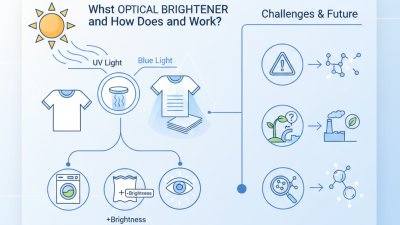
Optical brighteners are fluorescent compounds that absorb ultraviolet light and emit blue-violet light. This effect makes fabrics, paper, plastics, and detergents appear whiter and cleaner. They do not remove dirt. They change how the human eye perceives surface color. Common chemistries include stilbene derivatives, coumarins, and benzoxazoles. Each performs differently under heat, light, moisture, and washing conditions.
Grand View Research estimates the optical brighteners market at about USD 1 billion in 2023. The same report projects growth near 4.8% annually through 2030. Textile processing remains important, especially for synthetic fibers and blended fabrics. Textile Exchange reported that polyester represented roughly 57% of global fiber production in 2023. This scale supports continued demand for brighteners in apparel and home textiles. Paper mills also use them to improve visual brightness in office paper, coated grades, and packaging.
Industrial buyers should evaluate whiteness gain, dosage efficiency, migration, shade stability, and wastewater behavior. Performance can change between laboratory samples and high-speed production lines. That gap matters. Supplier documentation should include test methods, impurity profiles, safety data, and batch consistency records. Market estimates are not perfectly comparable because report scopes differ. Buyers should question unusually precise forecasts. A brightener that looks excellent under store lighting may perform poorly after sunlight exposure or repeated washing. Small pilot trials remain essential.
How to Evaluate Optical Brightener Suppliers in 2026
2026 Best Optical Brightener Suppliers for Global Buyers
How to Evaluate Optical Brightener Suppliers in 2026
Supplier evaluation should begin with evidence, not a polished website. A 2024 IMARC market analysis estimated the global optical brighteners market at roughly US$1 billion, with continued growth expected through the decade. That growth attracts new producers, but capacity does not prove consistency. Request three recent batch reports, not one perfect sample. Check whiteness index, moisture, active content, particle size, and shade stability under your actual process conditions. A supplier should explain testing methods clearly and provide traceable lot numbers.
Regulatory control matters equally. The supplier should provide current safety data sheets, impurity profiles, allergen statements, and transport classifications. For textile applications, compare documentation with restricted-substance requirements and recognized chemical management frameworks. ISO 9001 certification supports process control, while ISO/IEC 17025-accredited laboratories strengthen independent test results. The 2024 Textile Exchange Materials Market Report also shows rising pressure for transparent supply chains. Ask where raw materials originate, how complaints are handled, and whether production changes require buyer approval. These questions can expose weak systems quickly.
Tips: Test a pilot lot in your own factory. Use identical dosage, water hardness, temperature, and fabric type. Measure whiteness after washing and storage. Ask for a written corrective-action timeline. Price still matters. I have learned that the cheapest offer can become expensive after shade rework, delayed delivery, or rejected batches. However, even a high-quality supplier may fail if communication is slow. Score technical support, lead time, documentation, and batch consistency separately. Keep the scoring sheet; memory is unreliable.
Global Supplier Regions, Production Capabilities, and Certifications
2026 Best Optical Brightener Suppliers for Global Buyers
Asia-Pacific remains the main sourcing region for optical brighteners. Grand View Research’s 2024 market assessment identifies Asia-Pacific as the leading regional market, supported by textile, detergent, paper, and plastics production. China and India offer broad manufacturing capacity, while Southeast Asia provides growing export options. Buyers should check whether a supplier operates its own reactor, blending line, or only trades finished materials.
Production depth matters. Reliable suppliers should provide consistent powder and liquid grades, controlled particle size, batch traceability, and application testing under different pH and temperature conditions. Some facilities also support custom formulations for polyester, cotton, paper coating, and polymer processing. That flexibility can reduce reformulation work. It can also hide quality variation.
Certifications need careful verification. ISO 9001 supports quality management, while ISO 14001 and ISO 45001 indicate environmental and workplace systems. Chemical buyers should also request current SDS files, certificates of analysis, impurity profiles, and relevant regional registration evidence. The 2024 European Chemicals Agency enforcement reporting shows continuing attention to supply-chain chemical compliance. A certificate alone proves little. I would verify the issuing body, audit date, production site, and product scope. MarketsandMarkets projects continued growth in the optical brighteners sector through the decade, but public forecasts differ in market size and CAGR. That difference deserves scrutiny before making a long-term purchase decision.
Pricing, Packaging, Compliance, and International Trade Considerations
For global buyers, selecting an optical brightener supplier requires more than comparing quoted prices. Pricing usually depends on purity, dosage performance, order volume, and production location. A low price may hide higher testing, freight, or repacking costs. Ask for a recent COA, SDS, technical data sheet, and batch traceability records. Check whether the supplier can provide consistent whiteness across your intended material, such as detergent, paper, plastic, or textile applications. Small laboratory trials are essential. Specifications can look excellent on paper, yet processing results may vary.
Packaging affects both product quality and total landed cost. Moisture-resistant bags, sealed inner liners, and clearly marked lot numbers support safer storage and easier inspection. For sea freight, confirm pallet strength, container loading plans, and temperature limitations. Export documents should match the physical shipment exactly. Product names, HS classification, origin, weight, and dangerous-goods status must be reviewed with a qualified customs professional. Requirements differ by destination. Do not assume one compliance file works everywhere.
Tips: Request a full quotation with Incoterms, payment terms, lead time, minimum order quantity, and sample policy. Compare delivered cost, not only the unit price. Ask how complaints are investigated and how replacement decisions are made. Experienced suppliers usually explain limitations, not just advantages. I have found that buyers sometimes overlook humidity exposure during inland transport. That mistake can become expensive. A second review by your quality and logistics teams is worthwhile. Supplier websites are useful, but independent documents and trial results deserve greater weight.
Best Practices for Selecting and Managing a Reliable Supplier
Selecting a reliable optical brightener supplier requires more than comparing quoted prices. UNEP’s Global Chemicals Outlook II projects global chemical production could double between 2017 and 2030. That growth increases pressure on quality systems and supply continuity. Ask for current certificates of analysis, batch traceability, moisture limits, shade strength, and application-specific performance data. Request samples from different production lots. One sample is not enough.
Check whether the supplier controls raw-material changes, subcontracting, complaints, and shipment delays. The ISO Survey has recorded more than one million ISO 9001 certificates worldwide, but certification alone does not prove strong execution. Audit the actual plant, laboratory, storage area, and loading process when practical. Look for labeled drums, sealed sampling tools, calibrated instruments, and clear quarantine procedures. Small details matter.
UNCTAD’s Review of Maritime Transport reports that ships carry over 80% of global merchandise trade by volume. Therefore, evaluate port options, backup routes, packaging strength, and realistic lead times. Use service-level agreements covering specification changes, late delivery, rejected batches, and corrective actions. Maintain at least one qualified alternative supplier, even when the primary source performs well. A clean audit can still miss a weak night shift. I would not treat low price as evidence of efficiency; it may reflect thinner testing or unstable logistics. Review performance quarterly using defect rates, response time, delivery accuracy, and repeatability after scale-up. Reliability must be measured, not assumed.
Conclusion
This guide to the 2026 best optical brightener suppliers for global buyers explains how an Optical Brightener improves the perceived whiteness and brightness of textiles, paper, plastics, detergents, coatings, and other industrial products. It compares major brightener types by application suitability, light stability, compatibility, dosage efficiency, and performance in different processing conditions. Buyers will also learn how supplier expertise, technical support, production capacity, quality control, and product consistency can affect long-term results.
The article provides a practical framework for evaluating international suppliers, including regional manufacturing strengths, certifications, testing documentation, packaging options, pricing structures, compliance requirements, and shipping considerations. It also highlights best practices for requesting samples, confirming specifications, assessing communication, managing quality risks, and building dependable supply relationships. By considering both technical performance and commercial reliability, global buyers can select an Optical Brightener supplier that supports stable production, efficient procurement, and consistent product quality in 2026.